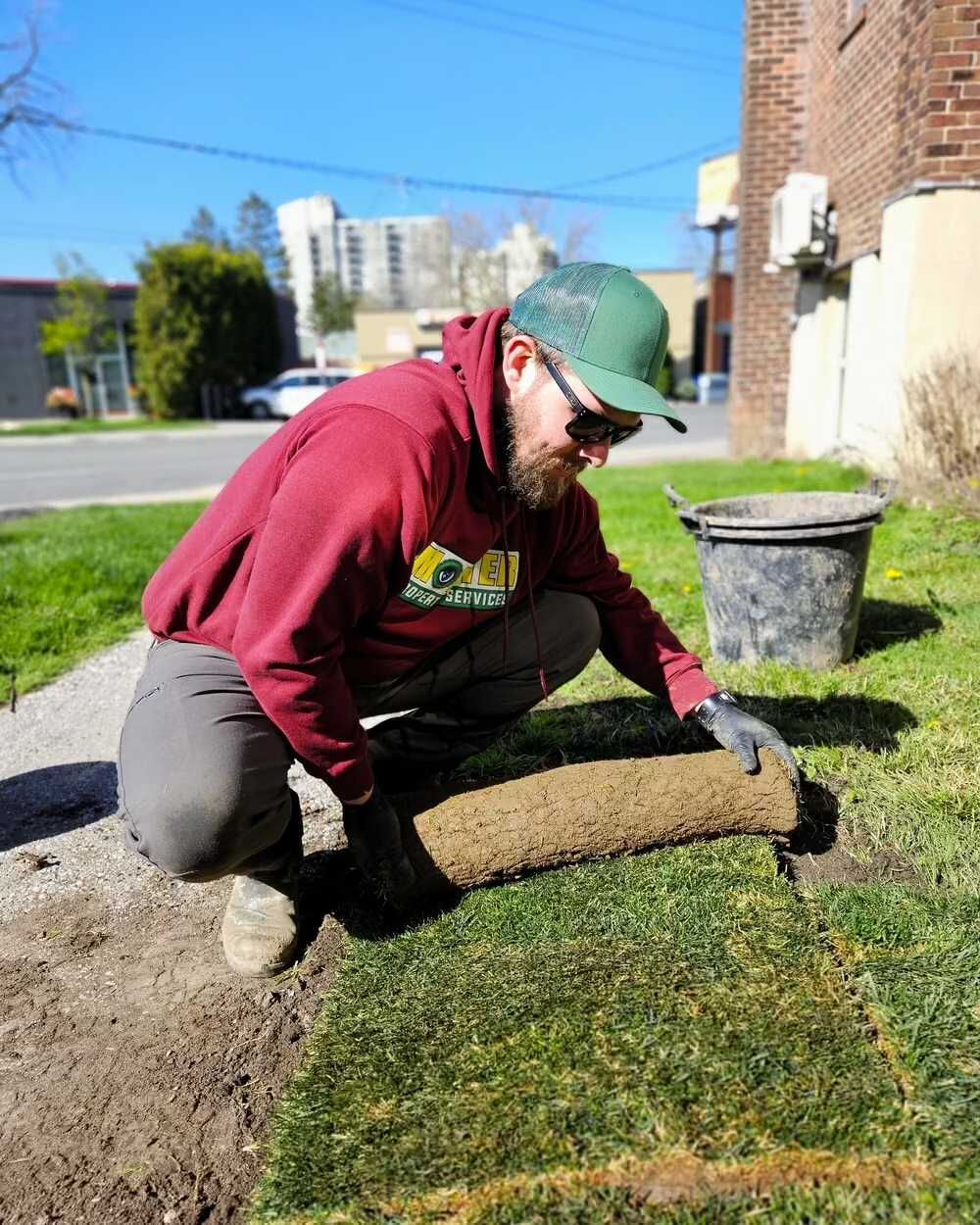
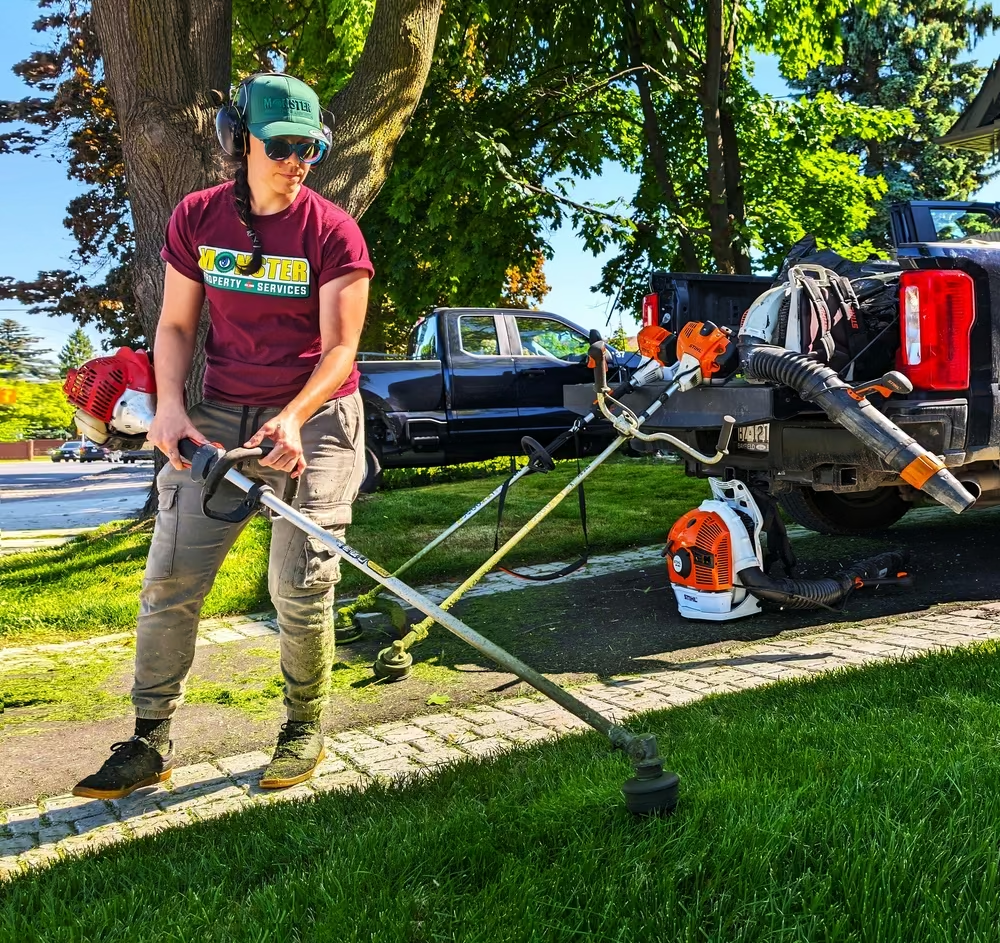
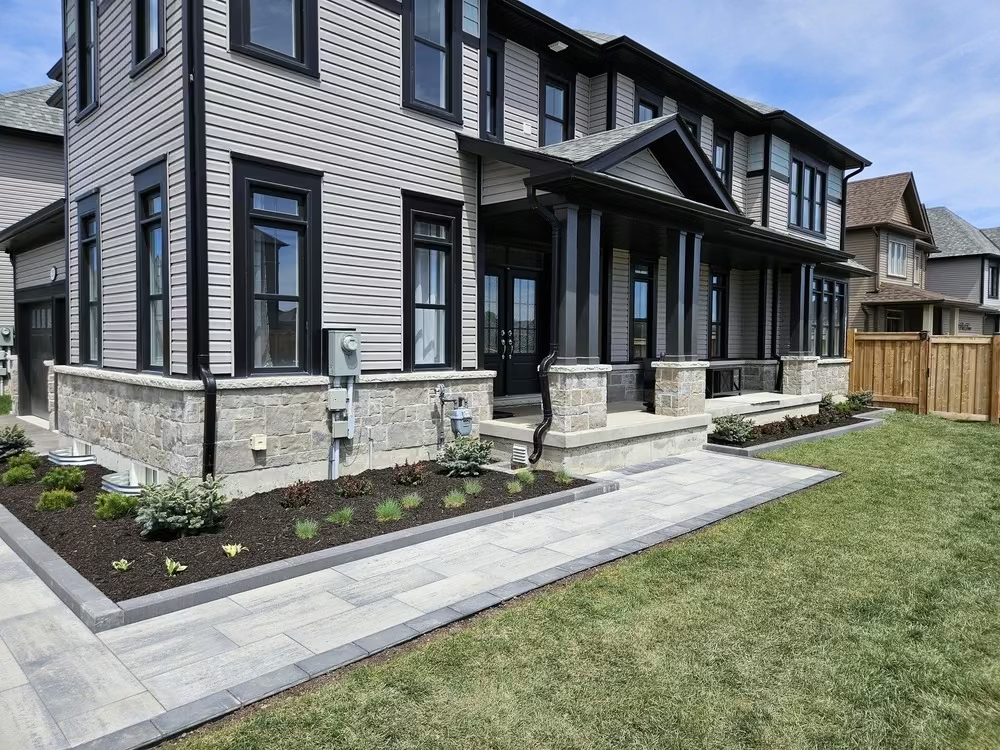
Retail at grade, residents above, offices in between. One vendor, one schedule built around who uses which space when, and one documentation standard across the whole property.
Mixed-use is the property type most likely to be running multiple exterior vendors at once — one for the retail frontage, one for the residential podium, one for whatever is left. Every hand-off between them is a seam, every seam is a gap, and every gap generates a complaint from at least one of your three audiences. Monster’s answer is structural: one contract, scoped by zone, run by one crew on one route, documented in one record.
A landscaper for the courtyard, another crew for the frontage, and nobody responsible for the walkways in between. Split scopes turn seams into misses — and every miss lands on the manager, not on whichever vendor’s line it fell outside of.
How one contract works →Retail wants the frontage done before doors open. Residents want quiet mornings. Office tenants want weekday access kept clear. A vendor with one default schedule satisfies exactly one of them. Mixed-use needs zone scheduling, because the property runs on more than one clock.
How zone scheduling works →With three vendors, every complaint starts with an investigation into whose scope it was. With one vendor and a visit record, it starts with evidence: date-stamped photos, a GPS-tracked fleet, and a digital service report covering the whole property.
How service proof works →Mixed-use documentation has to satisfy a condo board at the AGM and a commercial owner reconciling shared costs. Monster’s visit records are built to be forwarded — the same photo log works in a board package and an owner’s file, without re-formatting.
Talk to an Account Manager →Every mixed-use property gets scoped as zones, not as one lawn. The schedule comes from how each zone is actually used — and then it holds, week after week, because the property keeps its route assignment.
An account manager walks the site and maps the scope zone by zone — retail frontage, residential podium and courtyards, commercial and office areas, parking and access routes. Each zone gets its own scope lines inside one contract, so nothing sits between two vendors’ definitions of “my part.”
Service windows are set per zone: frontage work timed around retail opening patterns, courtyard and podium work timed around resident quiet hours, commercial areas on weekday patterns. The constraints go into the route plan when the property is quoted — not renegotiated visit by visit, not left to whichever crew shows up.
The crew works the zones on their route day and closes the visit with date-stamped photos and a digital service report covering the whole property. One visit record, every zone, on the log — the “did the courtyard get done?” question is answered by opening it, not by calling three vendors.
Retail frontage, resident courtyards, parking, loading — one crew on one zone schedule, one photo log, one flat-rate contract for the whole address.
Get a Mixed-Use QuoteMixed-use property maintenance is one scope at Monster, not four subcontracts. Every service below runs on routes, respects the zone schedule, closes with photos, and files to the same service record.

Retail frontage is public frontage. Monster is licensed, WSIB-compliant, and carries $5M commercial general liability coverage — certificates on request, before you sign, not after an incident.
Request Insurance & Compliance DocsConsolidation is the mixed-use argument. One contract instead of three. One invoice instead of a quarterly reconciliation exercise. One account manager who knows every zone of the site — instead of three dispatchers who each know a third of it.
And it runs on Monster’s own custom-built operations platform — in-house software, not off-the-shelf contractor apps — with AI-assisted dispatch and routing, service documentation, and weather monitoring behind every visit. Crews log work in real time from ~100 field tablets and staff devices, all on Monster’s own employee portal: one digital chain from quote to proof-of-work.
When common-area costs are shared between a condo corporation and commercial owners, the paper trail is the argument-ender: every visit’s service report and photo log shows what was done and where, so a manager can stand behind an allocation instead of defending an invoice line from memory.


Zone by zone, and it is set when the property is quoted — not negotiated visit by visit. Frontage work is timed around retail opening patterns, courtyard and podium work around resident quiet hours, commercial areas around weekday traffic. Because the property holds its route assignment, the pattern repeats week to week. If a constraint changes — a new tenant, new quiet hours, a board decision — it goes into the route plan, not into a voicemail.
The default is one contract and one invoice — that is the point of consolidation. Every visit is documented with photos and a service report showing what was done across the property, which gives managers a defensible basis for internal allocation. Where the ownership structure genuinely requires the scope split across entities, we build the plan that way on the same site walk — say so when you request the quote.
Whoever holds the contract — usually the property manager, or the condo corporation for the shared elements. What Monster controls is that the documentation works for both audiences: the same visit records and photo logs drop into a board package for the AGM and into an owner’s cost file without re-formatting. The governance is yours; the evidence is ours.
Yes — on request, before you sign, not after an incident. Monster carries $5M commercial general liability coverage; CGL and WSIB clearance certificates are part of onboarding, and we will send them directly to your insurer, board, or legal contact if that is easier.
Yes — that is the design. The property is assigned to a specific crew on a specific route, and the whole site is worked as one scope on that route day. When weather, staffing, or equipment forces a substitution, the zone scopes, history, and photo record travel with the route — a different crew still works from the same playbook.
Yes — winter is where Monster comes from. Winter service runs under Monster Plowing Company, the operation Monster Property Services was built from, serving seasonal clients across the GTA every winter. On mixed-use sites winter is where the zone logic matters most: retail frontage and access routes first, documentation throughout. Ask for year-round coverage in your quote request and both seasons are priced together — one vendor, one standard, twelve months.
Lock in one vendor for the whole year — grounds maintenance now, snow and ice on the same zone schedule when it counts, one documentation standard in both seasons.
Tell us about the property — every zone of it. We walk the site, map the scope, and come back with one flat-rate contract covering the whole address, documentation standard included. No pressure, no drip campaign. Join the seasonal clients who stopped chasing contractors.