The Old Way: Trust and Hope
For decades, property maintenance operated on a simple model: you hired a company, they said they'd show up, and you hoped they did. If your lawn looked decent when you drove by, everything was fine. If it didn't, you called and complained, they apologized, and the cycle repeated.
This model worked — sort of — when you lived at the property and could check the work yourself. But it falls apart quickly for property managers overseeing multiple sites, condo boards managing common elements, or homeowners who travel frequently. Without being physically present, you had no way to verify that service happened, what was done, or whether the quality met your standards.
The result was an industry with a trust problem. Property owners overpaid for inconsistent service, providers with good intentions had no way to prove their reliability, and disputes came down to "he said, she said" with no evidence on either side.
GPS Fleet Tracking: Proof of Presence
GPS tracking on service vehicles fundamentally changes the accountability equation. When every truck in a fleet is tracked in real time, there's no ambiguity about whether a crew visited your property.
What GPS Tracking Proves
Modern fleet GPS systems record more than just location. They capture arrival time, departure time, duration on site, and the route taken between properties. This data creates an objective, timestamped record of every service visit.
For property owners, this means you can verify that your property was actually serviced — not just that an invoice was generated. For property managers with multiple sites, GPS data confirms that all properties on a route received attention, not just the ones closest to the company's yard.
Route Efficiency
GPS data also drives operational improvements that benefit clients. By analyzing route patterns, travel times, and site durations, companies can optimize their schedules to reduce windshield time and maximize time on properties. More efficient routes mean crews spend more time working on your lawn and less time sitting in traffic on the 401.
This efficiency translates to better service at the same price point. When a company eliminates wasted time from its operations, it can invest those hours in more thorough work at each stop rather than rushing through properties to stay on schedule.
Photo Documentation: Proof of Quality
GPS tells you a crew was on your property. Photos tell you what they did while they were there. Together, they create a complete service record that eliminates guesswork and resolves disputes before they start.
Before and After
Timestamped photos taken at the start and end of each service visit create visual evidence of the work performed. You can see the condition of your property when the crew arrived, and the condition when they left. This is especially valuable after seasonal services like spring cleanup or fall leaf removal, where the transformation is dramatic.
For routine visits, photos document that mowing was completed, edges were trimmed, and beds were maintained. Over time, this photo history becomes a visual timeline of your property's condition through the season — useful for tracking landscape health, planning improvements, and demonstrating care to tenants or boards.
Issue Documentation
Crews that take photos also capture issues they notice during service: a broken sprinkler head, a developing disease in a garden bed, storm damage to a tree, or a drainage problem after heavy rain. Rather than hoping someone remembers to mention it later, the issue is documented with a photo and flagged for follow-up.
This proactive reporting catches small problems before they become expensive ones. A fungal patch spotted early and treated costs a fraction of what a full lawn renovation costs after the disease has spread unchecked for weeks.
Client Portals: Your Window into Service
GPS data and photos are only useful if you can access them. Modern property maintenance companies provide client portals — online dashboards or apps where property owners can review service records, view photos, and track their property's maintenance history.
For residential clients, this means peace of mind. You can check your portal from your office, your vacation, or your couch and confirm that this week's service was completed to standard. No more driving home to check, no more calling to ask if they came.
For property managers, portals multiply oversight capacity. Instead of personally inspecting every site after every visit, you can review service documentation for your entire portfolio from one screen. Flag anything that looks off, confirm quality across all sites, and produce reports for ownership or boards — all without leaving your desk.
The Insurance and Liability Angle
Documentation isn't just about service quality — it's about legal protection. In the GTA, slip-and-fall claims on commercial and residential properties are common, especially during winter. When a claim is filed, the first question is always: what maintenance was performed, and when?
GPS records and timestamped photos provide exactly the evidence needed to defend against liability claims. They prove that your property was serviced on a specific date and time, that the work was performed to a documented standard, and that your maintenance provider fulfilled their contractual obligations.
Without this documentation, defending a claim comes down to testimony and memory — neither of which holds up well months after the fact. With it, you have a contemporaneous record created at the time of service that's far more credible in legal proceedings.
Why Most Companies Don't Do This
If technology-driven accountability is so valuable, why don't all property maintenance companies offer it? The honest answer is that it requires investment, systems, and discipline.
GPS hardware costs money. Photo documentation takes time at every stop. Client portals need to be built and maintained. Data needs to be organized, stored, and accessible. All of this adds overhead that many smaller operations — especially those competing purely on price — choose not to absorb.
There's also a transparency factor. Companies that don't consistently deliver quality service have no incentive to create records that prove it. GPS tracking and photo documentation only benefit companies that do the work they promise to do. For everyone else, it's just evidence of their own shortcomings.
What to Ask Your Current Provider
If you're evaluating whether your current maintenance provider offers adequate accountability, here are the questions to ask:
- Do you GPS-track your service vehicles? Can I see arrival and departure times for my property?
- Do your crews take photos at each visit? Can I access them?
- Do you have a client portal or reporting system where I can review my service history?
- If I file an insurance claim, can you provide documentation of service within 24 hours?
- How do you handle issues your crews notice during service? Is there a documentation and notification process?
If the answer to most of these is no, you're paying for service you can't verify. And in an industry where trust has historically been the only quality control mechanism, that's a risk worth reconsidering.
How Monster Property Services Uses Technology
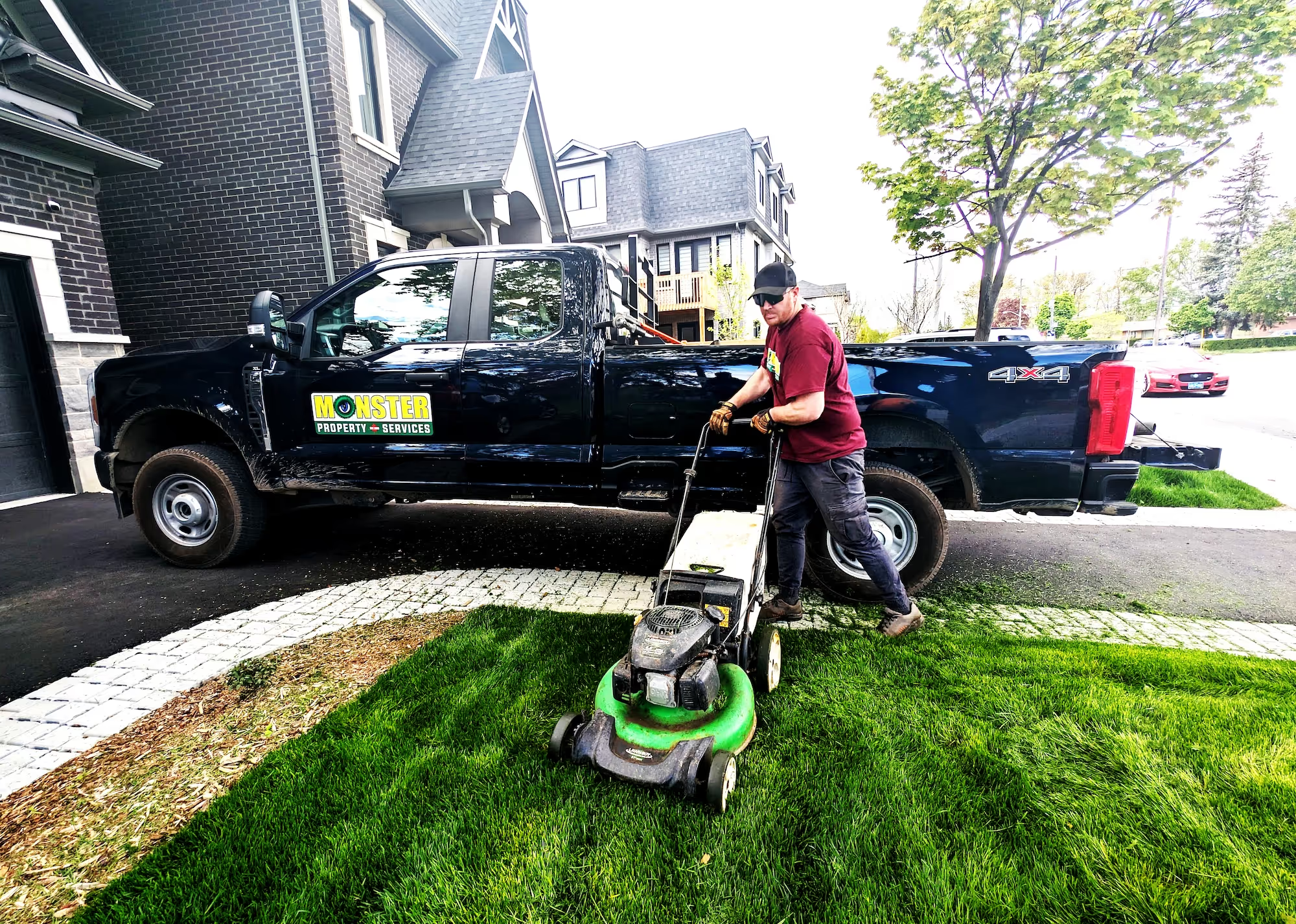
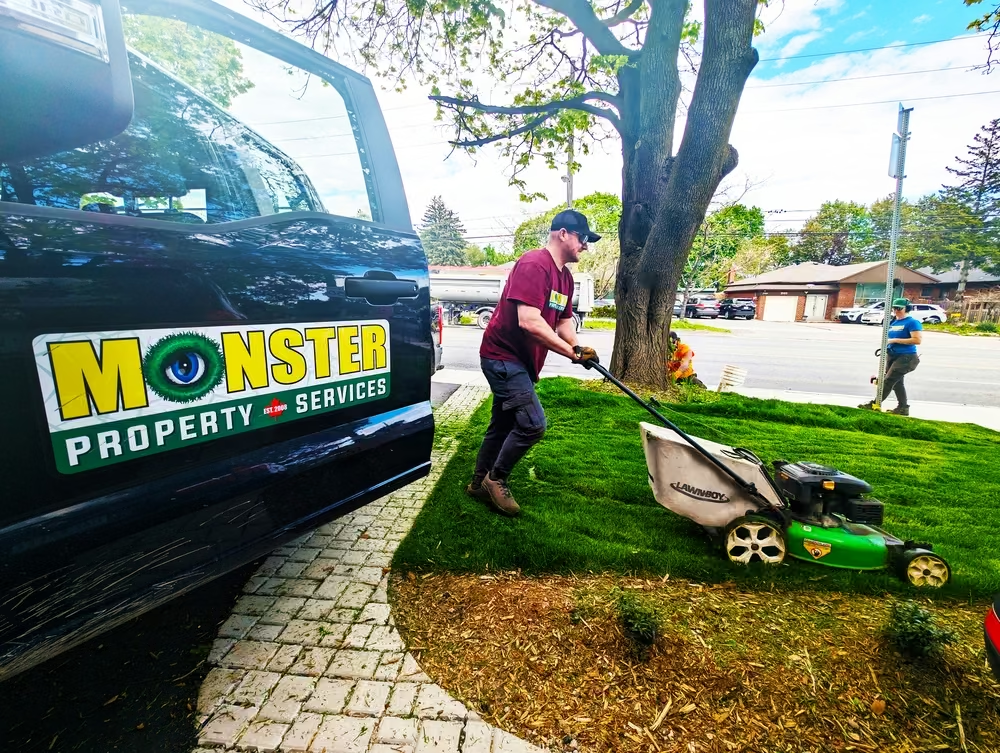
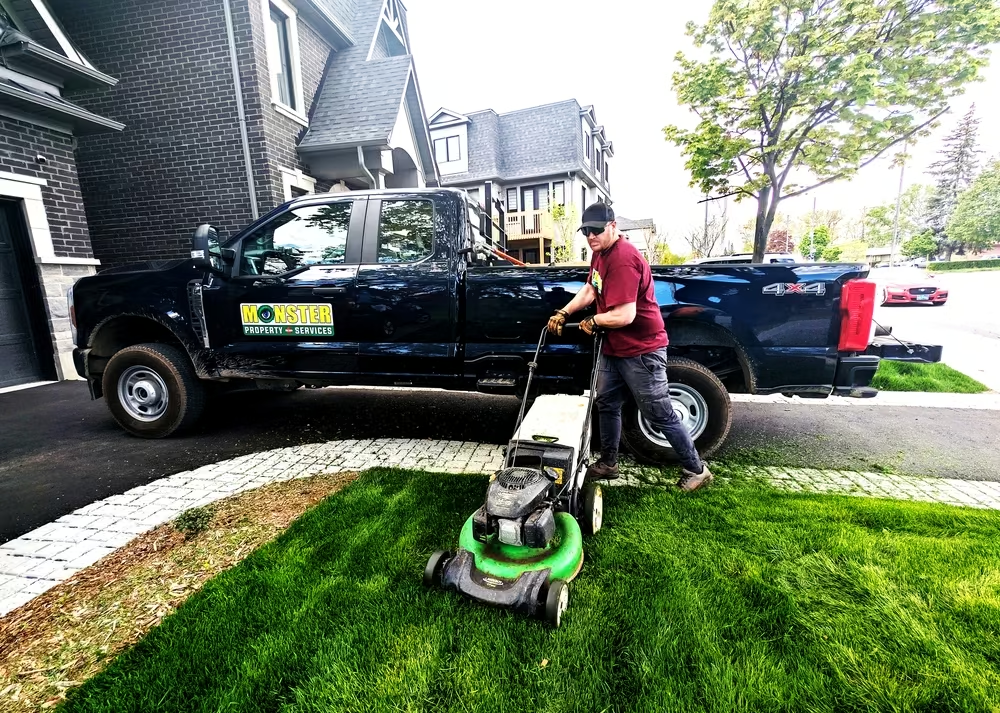
Every truck in our fleet is GPS-tracked. Every service visit is documented with timestamped photos. Every client has access to their service records. When we say your property was maintained, we can prove it — with data, not just words.
This isn't technology for technology's sake. It's accountability infrastructure that protects your property, your budget, and your peace of mind. Explore our plans or request a free quote to experience what documented, verifiable property maintenance looks like.